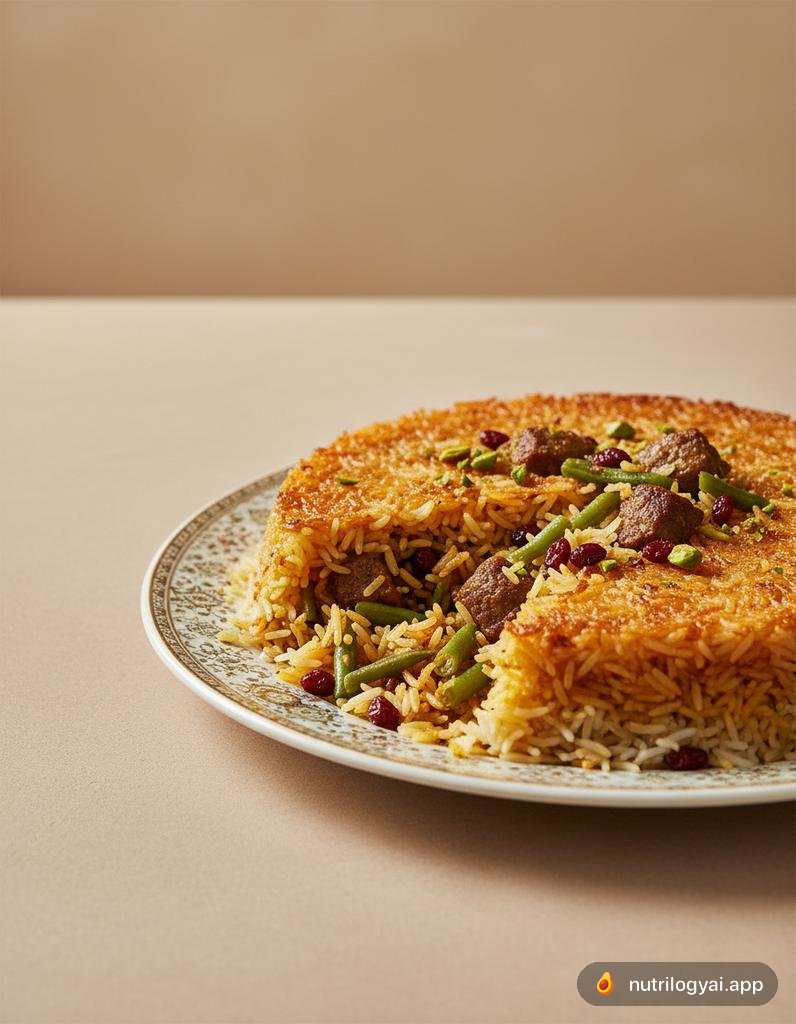
Kalam Polo
Nutrition
per serving (585 g)
877 kcal🔥 Calories
40 g🥩 Protein
39 g🥑 Fat
91 g🍞 Carbs
Fiber: 8 g Sugar: 0 g Saturated fat: 14 g Salt: 2 g
Count calories by photo 📸
This recipe and thousands more — with calories tracked automatically. Just snap a photo of your meal.
🛒 Ingredients
- Basmati Rice 100 g · 350 kcal
- Lamb, cubed 120 g · 290 kcal
- Green Beans, trimmed and cut 80 g · 25 kcal
- Onion, chopped 50 g · 20 kcal
- Tomato Paste 15 g · 12 kcal
- Turmeric Powder 2 g · 3 kcal
- Cinnamon Powder 1 g · 2 kcal
- Dried Lime Powder (Limoo Omani) 2 g · 5 kcal
- Vegetable Oil 20 g · 180 kcal
👨🍳 Instructions
- Soak the basmati rice in salted water for at least 30 minutes, then drain thoroughly.
- In a large pot, heat a tablespoon of vegetable oil over medium heat. Sauté the chopped onion until golden.
- Add the lamb cubes to the pot and brown them on all sides, then stir in the tomato paste, turmeric, cinnamon, and dried lime powder. Cook for a few minutes.
- Add the trimmed and cut green beans to the meat mixture, season with salt and pepper, and add a small amount of water. Cover and simmer until the lamb is tender, about 45-60 minutes.
- Meanwhile, parboil the soaked and drained rice in a pot of boiling salted water for 5-7 minutes, until al dente. Drain well.
- In a clean large pot, add a few tablespoons of vegetable oil, swirling to coat the bottom. For 'tadigh', you can layer thin slices of potato or a thin layer of rice.
- Layer half of the parboiled rice over the tadigh layer, then spread the lamb and green bean mixture evenly over the rice. Top with the remaining parboiled rice.
- Make a few holes in the top layer of rice with the handle of a spoon to allow steam to escape. Drizzle a little more vegetable oil over the rice, then cover the pot with a clean kitchen towel and a tight-fitting lid.
- Cook over medium-high heat for 10 minutes, then reduce the heat to low and continue to steam for 45-60 minutes, until the rice is fluffy and a crispy 'tadigh' forms at the bottom.
- Serve Kalam Polo immediately, gently mixing the layers and breaking up the 'tadigh' to serve alongside.